
From Shingle to Standing Seam: What Upscale Roofs Are Really Made Of
Fourteen thousand dollars. That’s the low end of what a decorative asphalt shingle job can run, and it’s the number that made my neighbor put down the sample book and walk away from the whole project. Three years later his roof is still builder-grade gray, and he still mentions it every time someone parks in front of his house. I get the sticker shock. But I also think most homeowners shop premium roofing in the wrong order, and that’s what makes the price feel like a punch instead of a plan.
We’ll walk through the materials that actually sit on upscale homes, the ones the sample book photographs beautifully and the ones that look plain until you’re standing in the driveway. Then I’ll give you the part nobody puts in the brochure: how to figure out which of them your house can honestly carry.
What Separates Premium Roofing Materials From Standard Ones
Two things, mostly. Lifespan and the way the material handles water at the edges. Standard asphalt shingles are the default for a reason, and they’re fine. They also curl, granulate, and start showing their age somewhere in the second decade. Premium roofing is about buying a longer interval between replacements, which is a math problem disguised as a design choice.
The second thing is edge detailing. Flashing, valleys, and the transitions around chimneys and dormers are where roofs actually fail. Cheap materials on a well-detailed roof usually outperform expensive materials on a sloppy one. That’s not a talking point, it’s just what I’ve seen on houses where one side of the ridge looks great and the other side got rushed on a Friday.
Copper, Slate, and the Materials That Age Into Something Better
Copper is the one people recognize. It starts bright and orange when it’s new and unpredictable, then settles into a brown, then a deep green over years of exposure. That green layer is a natural patina, and it’s also why copper shows up on historic buildings. If you’ve ever walked past a landmark with a soft green roof and assumed someone painted it, that’s chemistry doing the work. The National Park Service maintains preservation guidance for historic structures where this kind of metal work is the standard approach.
Slate is the other heavyweight. Genuine slate is stone, so it holds color for a very long time and looks like nothing else, especially in grays and soft purples. It’s also genuinely heavy, which matters. Old houses were often framed with slate in mind. Your 1990s colonial probably wasn’t. A structural engineer should tell you that before a supplier does.
Then there’s the middle tier that gets overlooked: clay tile, synthetic slate, and the various composite products that look like the real thing from the street. My honest take is that synthetic slate is the most underrated option on the list. You get most of the look, a fraction of the weight, and a warranty that doesn’t depend on finding a roofer who still trains on stone. Purists will argue with me. They’re welcome to.
When a Metal Roof Beats Everything Else on Your House
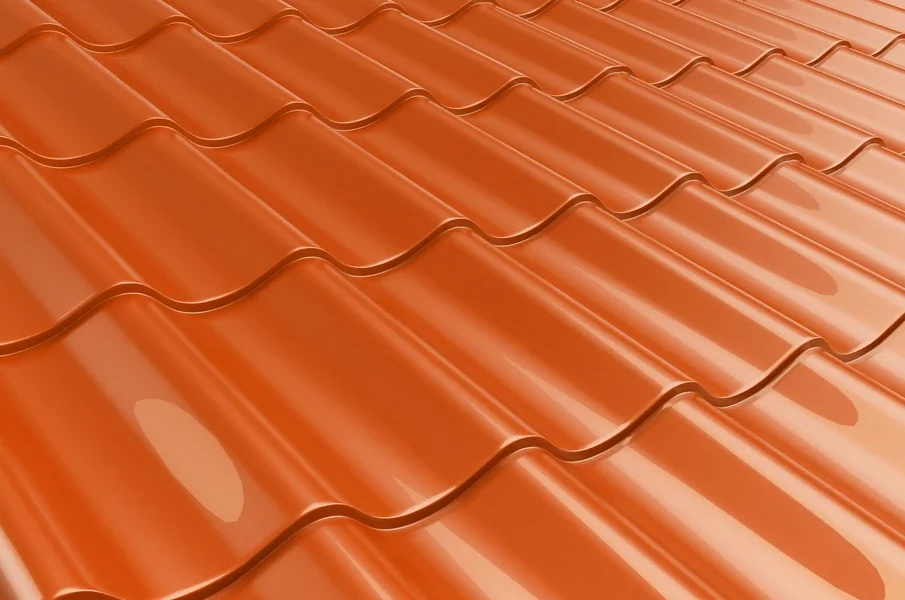
If your house has steep pitches, complicated hips, or long runs where you’d rather not think about the roof again, metal starts winning. Standing seam panels run in long vertical strips with raised joints, so there are fewer places for water to sit. Walking on one in the rain is a bad idea, though. Ask me how I know.
Metal also handles extreme heat and cold well, and modern coatings have gotten much better at shrugging off sun damage. The U.S. Department of Energy keeps a consumer resource on roofing choices and how surface reflectivity affects what your house absorbs, which is worth a look before you commit to a dark color in a hot climate. The rule I’d give you: if longevity and weather performance matter more than matching a historic look, metal usually wins. If you live in a genuinely historic district, copper or slate wins and it isn’t close.
Metal costs more up front, runs cooler in summer with the right finish, and doesn’t need much beyond a rinse and an occasional once-over for loose fasteners. For a lot of homeowners shopping this category, the real question turns into Where to Find Reliable Metal Roofing Options, because the material is only as good as the crew installing the seams. Skip that step and you’ve bought expensive sheet metal with a leak in it.
The Weather Question You Can’t Design Around
Wind uplift, hail, and freeze-thaw cycling don’t care how good your sample looked at the showroom. The National Institute of Standards and Technology publishes engineering data on how building materials and structures behave under wind and weather loads, and it’s a reminder that the same panel performs differently depending on how it’s attached, not just what it’s made of.
This is why I’d never pick a material off a photo. Hail resistance varies wildly within the same product family. So does wind rating, depending on the fastening pattern and the underlayment beneath it. Ask for the actual rating on the specific profile you’re buying. If a salesperson waves at the brochure instead of naming a number, that’s your answer about the company.
A Simple Way to Choose Without Regret
Here’s the sequence I’d hand any homeowner, in order.
- Check the structure first. Find out what your framing can carry before you fall in love with slate. This kills the most expensive mistakes early.
- Decide your horizon. Staying fifteen years or more? The math favors copper, slate, or quality metal. Selling in five? Spend the difference somewhere else.
- Match the neighborhood, then break the tie. A copper roof on a street of builder-grade ranches looks like a mistake. It doesn’t have to stop you, but go in knowing.
- Interview installers, not materials. Ask who’s doing the flashing. Ask what happens if a seam fails. Vague answers are expensive.
- Get the weight, rating, and warranty in writing. Three numbers, one page. If nobody will put them in writing, move on.
The pattern in all of it: the decision is 30 percent material and 70 percent who’s holding the tools. We spend months on the sample book and about ten minutes choosing the crew, which is backwards.
The Short Version
Copper and slate reward houses built for them. Metal rewards houses that get brutal weather and owners who hate repeat projects. Synthetic slate quietly beats both on value for most people, and I’ll take the argument. Whatever you pick, verify the framing, get the ratings in writing, and choose the installer like it matters, because it does.
One last thing. Go stand on the curb and look at your house for a full minute before you order anything. The material that looks best in your hand is rarely the one that looks best from thirty feet away, and thirty feet is where you’ll actually live with it.